
Reed Seeds on the Current
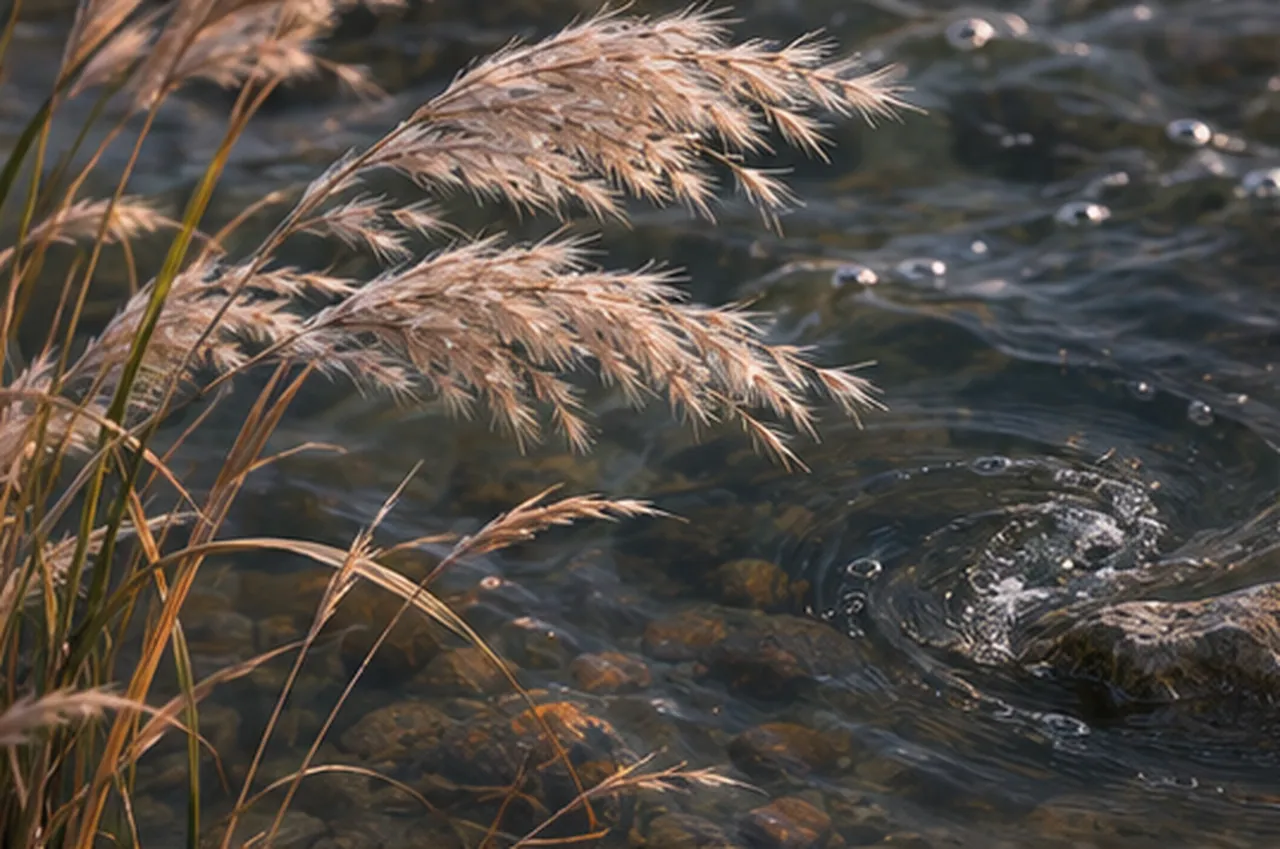
Follow the low point above the water
A few seeds leave a reed head just before the boat comes around the short end of the islet. The seeds move against a partly shaded surface. At first one of them appears to follow the same path as the skiff. Once the water opens, it travels toward the opposite side and reveals a curve in the current. The first sketch showed all of this in the brightest part of the river, where the pale color on the water hid the seed.
Put darker water behind the first movement
The new scene places a shadow beside the bank before the flow takes the seed out to brighter water. The seed shows as a tiny light shape there. It reaches a narrow strip of water that is easier to see between the boat and a low rock. Put the steady edge of the rock in view first. The moving seed can then show which side of that fixed point the surface water turns toward.
Separate a reflection from a moving point
A second change softened a long pale line reflected by a bent reed. The line follows the bank and does not travel with the seed in this view. In the early drawing it stayed at the same brightness as the seed through much of the approach. We kept enough contrast for a person to recognize the reed itself and drew a shorter reflection along the outline beside it. When the seed moves away, the longer dark area makes its exit easy to read.
Visit a closer angle at the tip of the islet
From the end of the island, the water seems to reach the pale heads more quickly. The seed crosses the gap at the rock just before the nearest stems block the bank. Watch the side of the boat when the rock leaves the picture. The later part of the same wake travels close to the skiff and gives an idea of where the current is headed. The Islet Past Twelve Reeds uses this position on the approach to a quiet recess.
Give a moving seed room to cross a known shape
If a seed only appears against open water, it can look like it has changed speed when the camera turns. The edge of a dark reed bed supplies a fixed comparison. Place the last visible part of the bed near the place where the current begins to curve. The player can watch three small points pass through one space instead of looking for the same seed for the whole approach. Drift past the end of the bed and check which points are still moving in the earlier direction.
Let one movement belong to the skiff
The film of water on the side of the skiff can carry a very narrow pale streak. It slides along with the boat rather than following the wider curve across the channel. This gives the player two moving references close enough to compare near the dark bed. The Shadow below the Islet finds a much larger difference when an edge in the water separates from its source. The smaller view helps us work out how far the two cues should be apart.
Check a later position without the opening image
In another trial the boat arrives after the first seeds have moved into the bright water. The closest dark place might show a second one. Leave enough room between the two positions so the player can anticipate the direction rather than see both at once. Landing Revisions keeps the earlier bright version beside the current one so we can decide whether the opening has become legible enough at both positions.
Preserve a piece of the crossing in the art
The final illustration concentrates on the darker part of the river just below the reed heads. It leaves some open surface across the right side of the frame. A person can imagine the seed leaving it without needing to know where the whole boat will go. The next landing study can use that motion near a part of the bank where the pale shape remains hidden for slightly longer.