
The Shadow below the Islet
Start with two edges in almost the same place
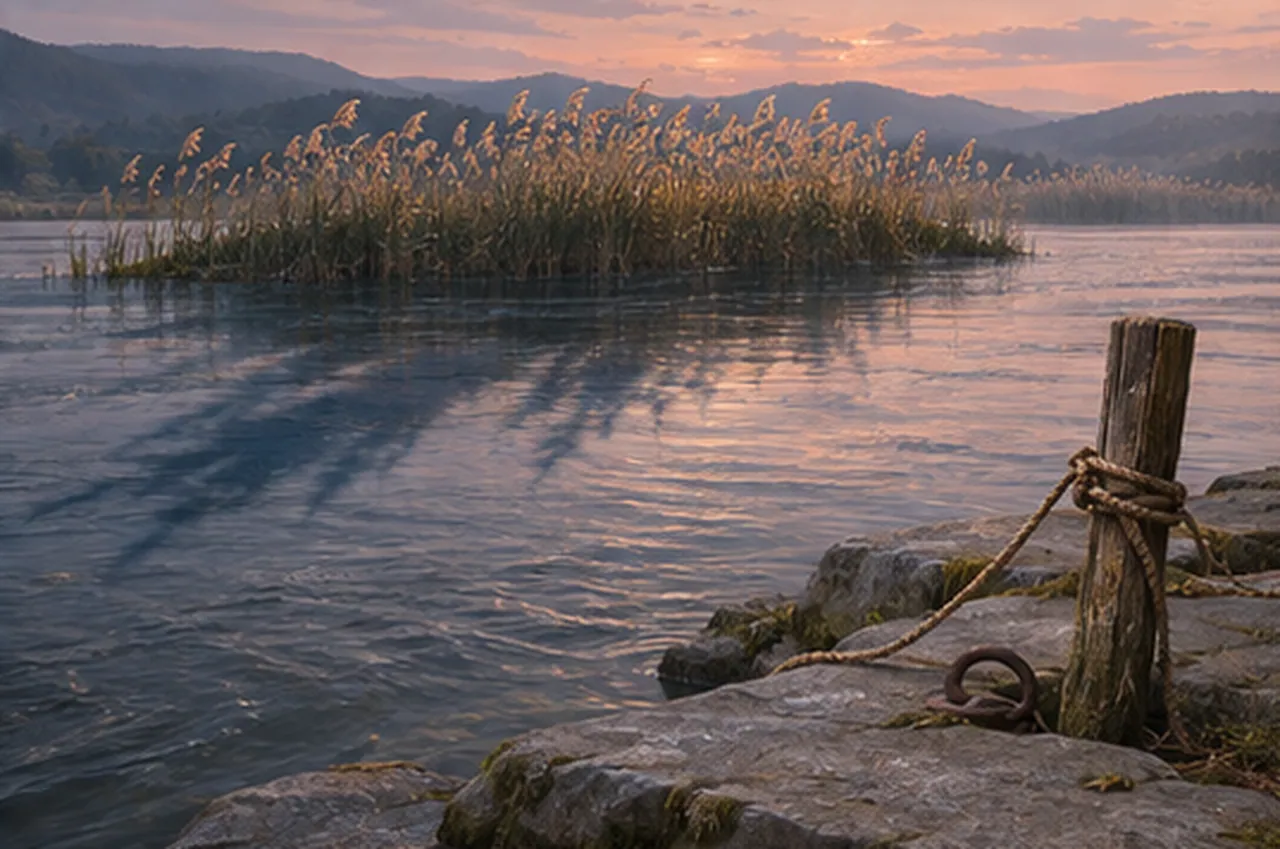
At the wide bend, the islet throws a long dark shape into the reach. In our first pass the same jagged edge appeared at the base of the bank and along the reflected shadow. Seen from the front, the island seemed to continue much farther than it should. A traveler drifting off the bank could read the wrong edge and wait too long to turn toward the darker channel.
Let the reflected edge turn earlier
The island itself falls away from the deeper water in a smooth curve. We shifted the strongest part of the dark shape slightly inland on the near end. The base of a higher tuft remains visible at that point, while the shade it casts separates from the solid edge. Watch both ends of the tuft as the shoreline changes angle. One remains aligned with the bank when the other gives the first useful hint of where the water recedes.
Use light behind the shadow
The water near the shallows becomes cooler just beyond the large dark wedge. A short line of lighter sand stays visible below that cooler region. From the boat it appears to bend toward the back of the island. When the water grows darker, its shape can still be imagined from the part that survives near the shore. Last Landing Before Dusk uses the surviving edge to choose how far to go around the shoal.
Move below the ridge of reeds
One approach to the far landing crosses a place with no clearly lit stones. The reeds make a ragged line above water that stays visible for a while. The shadow behind them makes a different shape after turning into the current. Use the earlier shape of the shore to follow that change. If the line appears to become part of the river again, the player can check whether the shallow edge has already moved behind the boat.
Keep a familiar place visible in the route
A few bare stones stay visible under the highest end of the islet. The farther channel aligns below them and continues beyond the point people tend to watch first. Move past the early place to turn and the edge of the deeper water becomes clear beside those stones. The Bank with a Recess compares a near approach where the low stone disappears much sooner. We keep the broad shadow experiment separate because it offers time to gather information from several positions.
Change the light in a controlled trial
When the sky becomes darker, the shadow can merge with the neighboring water and leave its outline almost invisible. A bright upper sky made this easier to see in the first sketch. For the low light version we left a reflection along the edge of the river farther down. The skiff can start before it reaches that cue and make a later turn after comparing the remaining contrast. A band of darker shoreline still gives a stronger idea of position.
Make room for a view from the far bank
At the landing you can see a piece of the shadow stretching behind the route you just took. It arrives on a different side of the island than it seemed from the original position. Keep this return view with the first drawing so the player can place the more distant clue after coming ashore. Landing Board brings the first sketch close to a second photo of the lower landing. The two keep the solid bank and the edge in the water available to compare.
Return to the design decision
Landing Revisions records how the shadow stopped being an extension of the land. The next version may move the shoal to a shallower area of the reach. Compare the earlier study with that drawing and preserve the same difference in direction. The corner of the dark water can then stay useful even when the route leading to it changes.