
The Bank with a Recess
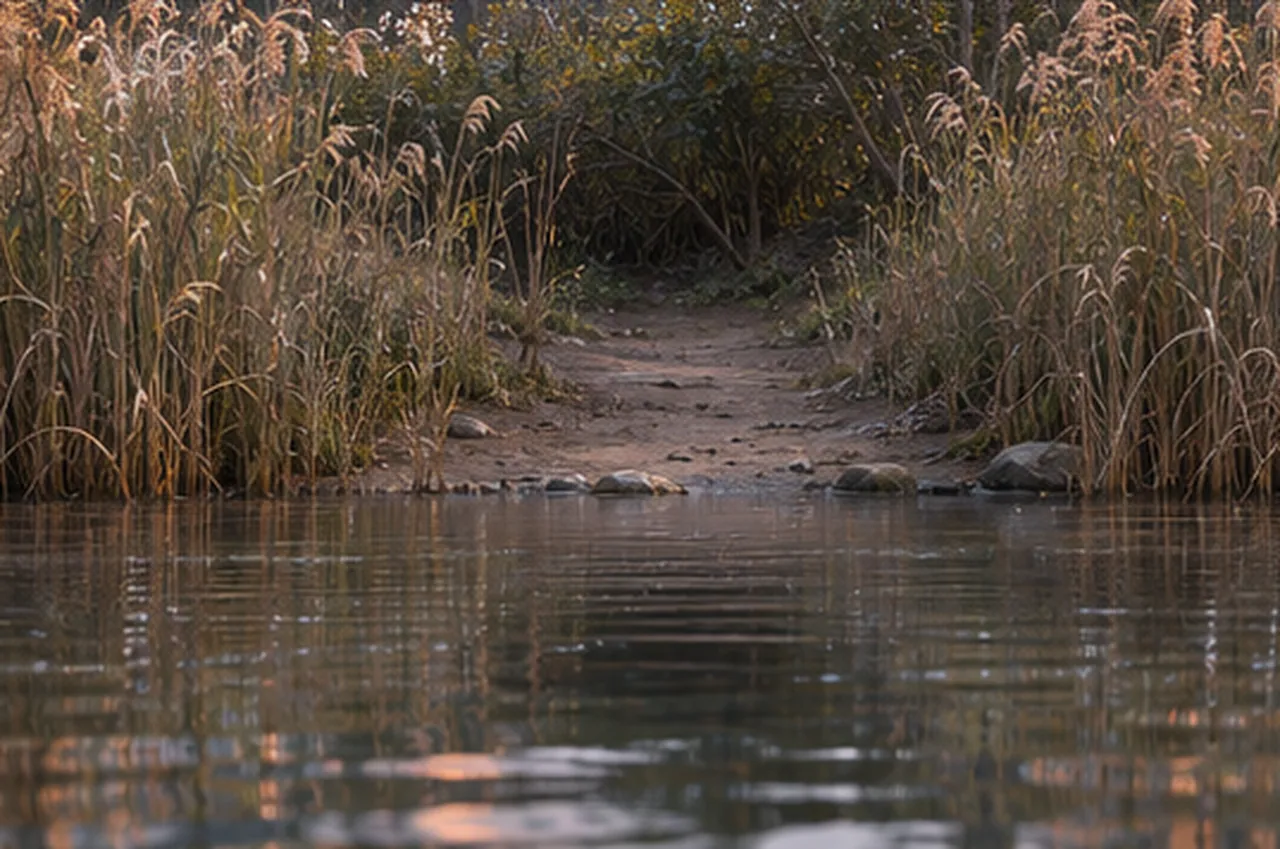
Let the notch be a place in the shore
The boat can see a dark notch between two clumps of pale reeds. Early concept pictures made it just a gap in the plants. As the camera got closer, the reeds seemed to spread apart and the shore itself disappeared behind their stems. The recess needed a recognizable shape at the water to show that the boat could reach it from the other side.
Add a low stone to the floor of the opening
We put a flat stone just above the water beside one end of the recess. There is room between its top and the reeds for a dark space that follows the inside of the opening. Coming from upriver, the stone stands out below a single pale stem bent toward the bank. When the boat draws level, that stem moves out of sight before the stone. It gives the player a reference that can be carried through the shift in view.
Read the approach from a little farther out
If the skiff comes too near the first patch of reeds, the face of the recess is difficult to see. Turning into the space slightly later reveals the stone and a short set of steps behind it. The Islet Past Twelve Reeds allows a person to continue past the marker, then turn and decide what to do from a view where the narrow shape is clear. The old angle stays possible to revisit from just beyond the open bank.
Keep the far edge in the wider picture
Lake reflections can give the recess a second apparent opening below the ground. To make the location clearer in the cover image, we leave the upper edge of the stone dry and the lower edge visible through the ripples. The space between the shore and the water stays tighter than the gap made by the reeds. A small patch of soil above the stone shows where the landing continues into the bank after the skiff reaches it.
Compare a moving detail at the corner
Reed Seeds on the Current describes the way seeds are visible near the beginning of the route. At the recess they drift across the end of the cove. Their visible movement goes past the landing while the stone remains still. This keeps the original direction of flow understandable for a little longer. If the skiff starts to move across that path, the change becomes visible beside the stone.
Watch what the landing can hold
A Wake Returns from the Landing takes the view forward from the first single stem to the moment of rest. There is still enough room to compare the skiff against the rock when the wake comes back. The recess needs to appear deep enough to receive the bow while holding part of the muddy water visible at either side. The player can remain in the boat for another moment and see where the opening travels when they move slightly again.
Repeat the picture with less light
In the late afternoon the nearest reeds take a slight warm edge. The grass farther into the recess can be almost black. We keep a dull overhead reflection on the water just beyond the stone to distinguish it from the inside of the bank. The current study starts with more light, but a dusk version should preserve that steadier part of the picture and keep the curved gap available until the skiff is almost at rest.
Record the difference from a gap between reeds
Landing Revisions pairs this scene with a version where the notch could move or disappear as the stems changed their order in the view. From the second angle you should still be able to describe the location of the recess in the bank itself. We can add another false gap to the shore later and check whether the low stone supplies enough context to keep those two places distinct.