
A Wake Returns from the Landing
Hear and see the first contact at different times
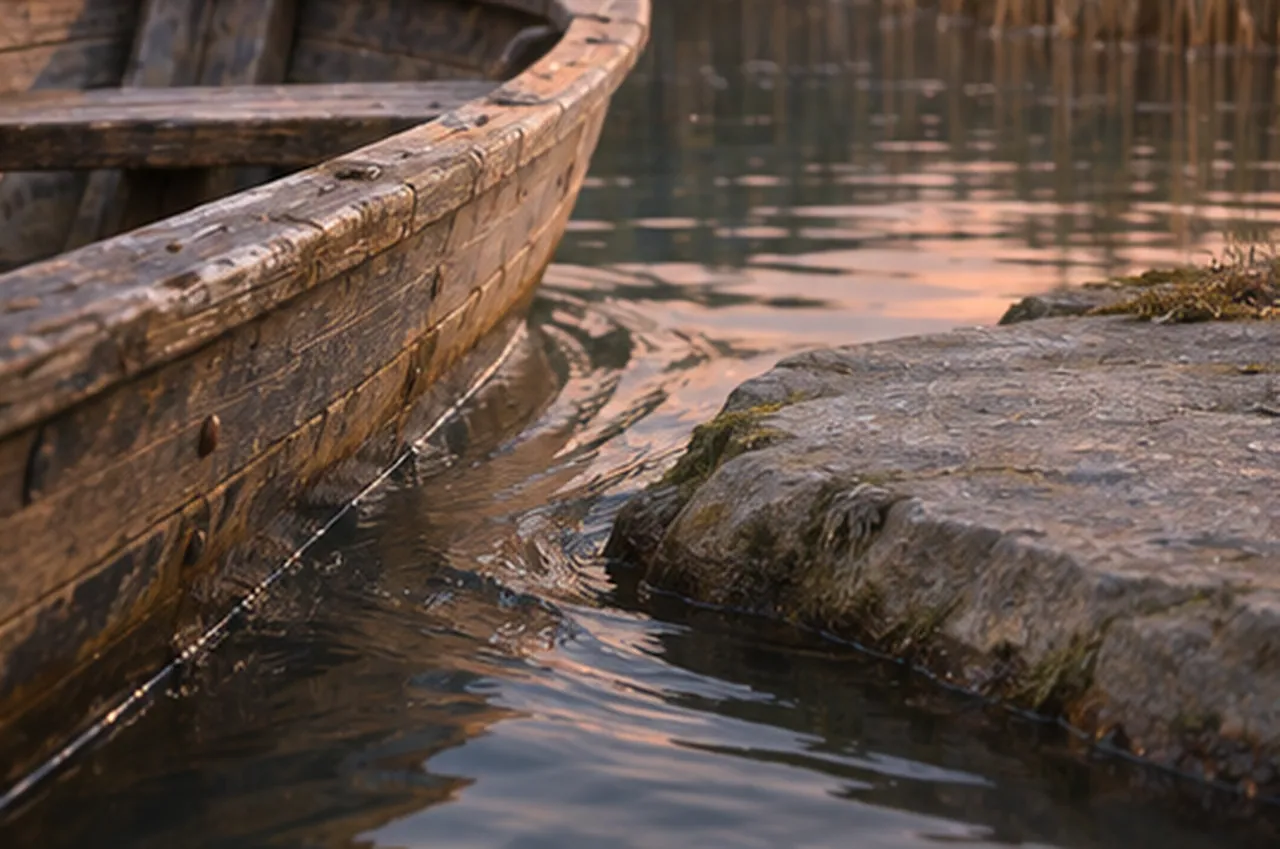
Near the last stone in the recess, the edge of the skiff approaches a short still patch of water. A low sound suggests contact as the bow gets close. In the old scene the sound ended the movement at once. The new version lets a small ripple travel away from the boat, reach the stone, and return. Part of the decision about when the boat has stopped becomes available in the view instead of being determined by the sound alone.
Give the first ripple an intact curve
The outgoing wake is sharp close to the wood and becomes thinner beyond the bow. It moves across a pale section of water near the rock. The first visible return happens a little lower in the picture. Its curve seems to reverse before it reaches the boat again. The difference in direction helps the player identify which line belongs to the contact and which parts of the river are still flowing past the stone.
Keep the boat drifting a small amount
The skiff can slide slightly alongside the landing after the first sound. Comparing the bow to the stone gives evidence of that motion before the second wake arrives. We preserve a small light gap by the end of the flat stone. When the skiff moves, the gap changes even if all the larger shapes seem to be still. The player has a brief chance to adjust the angle or wait for another ripple before leaving.
Watch the same place with audio turned down
Sound provides a soft contact and the sound of moving water keeps its ordinary rhythm. Someone testing the game with quiet audio can read a small bright ripple instead. The stone and the position of the bow remain available through the whole approach. In Last Landing Before Dusk the light is already fading by the time the boat reaches a similar surface. The still visible edge lets you compare motion with the last clear position.
Let the water take enough time to show a result
In an older version the wake reached the stone and returned with no gap. The repeated motion looked like an illustration of a place you had already reached. We inserted a brief interval while the ripple bends against the stone. A person can observe that return and still see a wider river current moving across the end of the islet. The small event becomes meaningful among the bigger movements rather than replacing them.
Place the event in a cove you can identify
The Bank with a Recess uses a bright stem above the entrance before it needs the low stone. At the landing the plant no longer has to dominate the view. A narrow strip of it can remain visible beside the opening if you turn. The part of the shore that carries the wake is deeper in the small cove. Keep it in place through the time the skiff settles so the place feels connected to the earlier view.
Look for a different return on a wider landing
We may use the same test where the last stone has a flatter face and lies farther from the bow. One reference remains where the ripple bends. Another comes from the space alongside the boat, which stays open for longer before the water settles. That wider view can help identify what is related to forward movement and what the river will do after the boat has stopped making its own wake.
Read the final outcome at the boat
Landing Revisions keeps the first point of contact beside the second return. The shot can end when the skiff is stable against the stone from the chosen angle. Give the person a view of the boat and its position relative to the rock. That is enough to explain the settling moment without resetting the river, its reflected light, or the movement beyond the landing.