
Last Landing Before Dusk
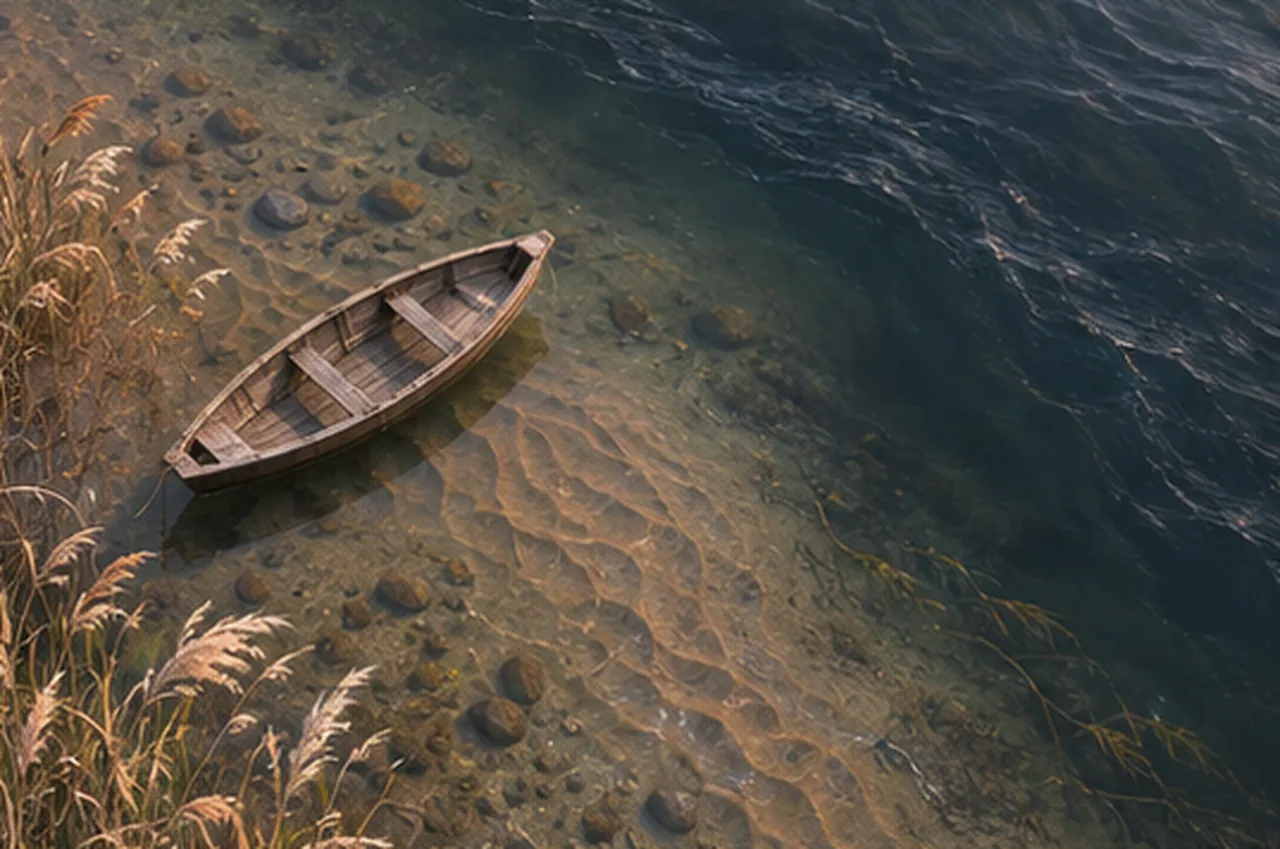
Enter water that hides its shape after sunset
The second case begins farther from shore. The first thing you can see clearly is a long pale area where the river runs shallow. A dark wedge travels along the island below it. Near dusk the wedge seems to move while the edge above it stays in place. Hold a little room to turn until you can place the two lines against a part of the stronger current.
Read what the bright water is covering
At the start of the turn a pale sandbar offers a broad shape around the skiff. Its edge grows faint as the current takes the boat beyond it. Near the outside, the shadow of the islet crosses the brighter surface from a different direction. The Shadow below the Islet tells how the prototype distinguishes the edge of the island from the part seen in the water. Look past the dark wedge to find where the route would leave the shore.
Keep a late marker on the far side
The other side of the sandbar has a small stack of two dark stones. In the first wide view they appear beside a bright part of the reeds. Move down with the current and the stones become easier to compare with the edge of the water. The low landing sits behind them. You can place the first turn in the area still visible and keep a farther glimpse of the shadow to guide the rest of the curve.
Choose a place to pass the sandbar
The shallow edge reaches farthest toward the skiff near the center. You can follow its longer part and turn beyond it, or approach the far shore with a slightly wider arc. Both routes need a piece of the light to remain visible before the next marker appears. The turn should still make sense when the current brings the boat in a little faster than expected. The broad scene leaves space to see that change before approaching the smaller landing.
Wait when the skiff reaches the stone
An earlier jump to the landing view hid the last part of the movement. A Wake Returns from the Landing follows the moment the bow reaches the stone and a second narrow line moves back toward it. In the current test the camera stays at the same height until there is a little space without visible movement. If the return wake comes back too close to the bow, there is time to look again before leaving the water.
Use dusk to separate shapes
The late sky becomes a soft rose above the deep blue channel. The bright sandbar shows through a cooler part of the water and then recedes toward a brown area beside the shore. Reeds retain a small pale edge as the far bank loses contrast. The light should slow what the person can recognize without making the river disappear into a single color. The low stones keep a clear enough outline to finish the last turn.
A concept across one shoal
The current prototype explores a wide turn and a short final approach. It keeps the opening from the sunlit side available in the Landing Board so it can be compared with the darker approach. An expanded reach could add a second low shelf where the river changes pace. The first test is whether the traveler can find the landing after the strongest light has gone and explain where the shape of the deeper channel first became available.